


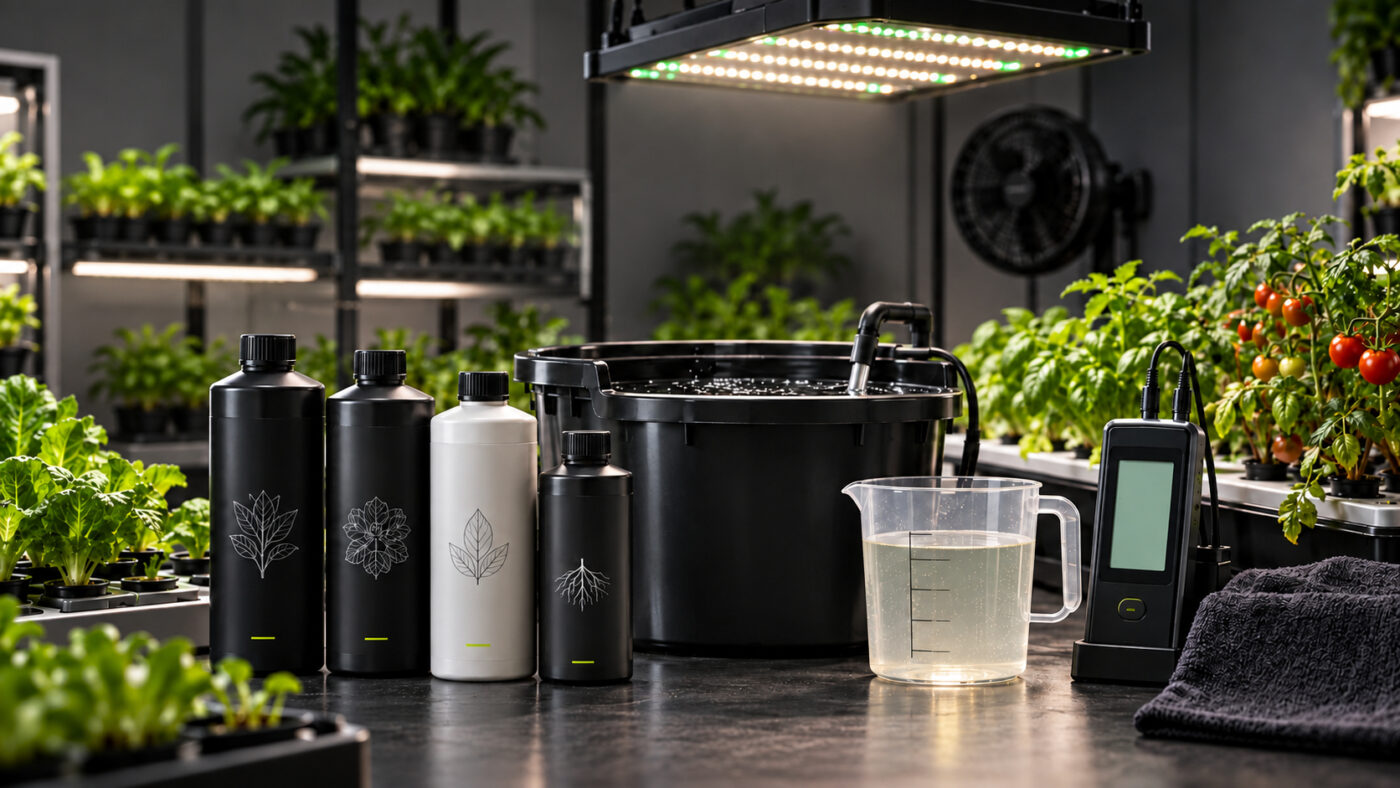
A useful feeding routine begins before the first bottle is opened. Your source water, substrate, crop and irrigation system all affect what reaches the roots. Adding more fertiliser is not automatically the answer to pale leaves or slow growth. Water stress, root problems and unsuitable environmental conditions can produce symptoms that resemble a nutrient issue. Build a simple baseline first, then make changes you can measure and explain.
Understand the water you start with
Measure and record the source water before mixing nutrients. Electrical conductivity, or EC, indicates the combined effect of dissolved ions; it does not identify which individual nutrients are present. Water that already contains substantial dissolved salts gives you a different starting point from low-EC water. For a recurring problem or a larger operation, arrange appropriate laboratory water testing and qualified interpretation. Include alkalinity in that discussion. Water pH and alkalinity are not interchangeable: alkalinity affects how strongly water resists a pH change. Keep records of source changes, including seasonal changes or a switch between supplies.
Choose a base nutrient for the growing method
A base nutrient is the foundation of the programme. Match it to the substrate and intended crop rather than choosing by the number of additional bottles available. Plant Mechanics COCO+ A&B is listed for coco-based growing. Plant Mechanics Full Spec Grow A&B and Full Spec Bloom A&B are separate catalogue formulations: check the current manufacturer guidance for the relevant crop and stage before selecting one. Do not combine multiple complete base programmes at their full recommended strengths. An additive is not a substitute for a correctly selected base nutrient, and a product name alone does not establish that your crop needs it.
Make mixing a repeatable process
Use a clean reservoir and measuring equipment reserved for plant nutrition. Establish the actual water volume rather than relying on a container’s nominal capacity when it is only partly filled. Read the current instructions for every product before mixing, including the required order. Keep concentrated A and B components separate; add each to the water as directed and mix thoroughly between additions. Never mix concentrates directly together. Measure the finished solution after the products have dispersed, and record the result before feeding. Where an adjustment is required, follow the labelled procedure, personal protective equipment requirements and safety data sheet. Do not improvise a chemical recipe or transfer chemicals into food or drink containers.
Use pH and EC as checks, not universal targets
pH affects nutrient availability, while EC helps track overall dissolved salt concentration. Neither measurement replaces observation of the plant and root environment. Set targets from guidance appropriate to your crop, development stage, substrate and product programme. A single internet number is not a reliable target for every hydroponic garden. Maintain and calibrate meters according to their manuals, use the specified care materials and note the measurement units. Compare readings taken at consistent locations and times. If an unexpected result appears, confirm the instrument and sampling method before making a large correction. EC cannot tell you whether the nutrient balance is correct, even when the total reading looks familiar.
Check delivery and drainage before adding more
In a substrate system, inspect whether each container receives water and can drain freely. Compare feed and drainage measurements using a consistent sampling method appropriate to the system. A rising drainage EC can prompt investigation of salt accumulation and irrigation management; it is not a diagnosis on its own. UF/IFAS emphasises that media water-holding capacity and plant demand influence irrigation frequency. Avoid copying its Florida crop schedules directly into an Australian room. If plants look stressed, record the symptoms, distribution, recent changes and root-zone observations. Change one justified variable at a time where practical, then review the response rather than stacking several new additives.
Keep a short feeding log
Record the date, crop stage, water volume, products used, label-based amounts, source-water readings, finished-solution readings and any irrigation changes. Include reservoir temperature observations and equipment faults where relevant. This turns the next decision into a comparison with evidence, not a guess. Store nutrients securely, retain their labels and organise disposal of unused solution responsibly.
